The Second International Conference on Climate Leadership was recently held at Harbin Institute of Technology. As a key component of the event, the parallel forum on "Climate Risk Governance and Green Finance Innovation" convened in two sessions, with discussions spanning the effectiveness of green financial instruments, climate policy risk transmission, and governance mechanisms for Environmental, Social, and Governance. Over 20 experts and scholars from universities and research institutions worldwide participated.

Green Financial Instruments: Effectiveness and Policy Innovation
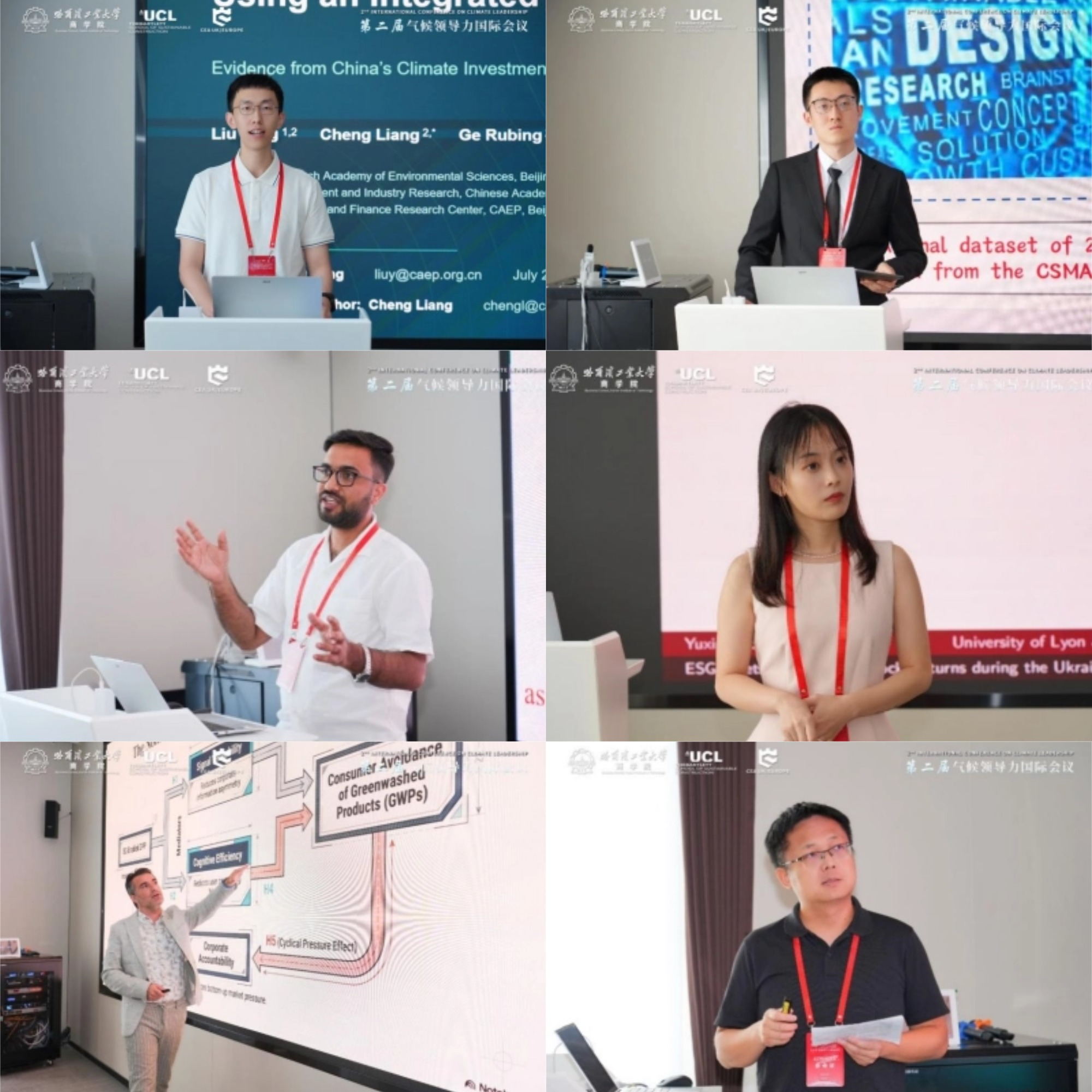
The forum assessed how well green finance policy instruments work in practice. On climate finance project performance, a study of Chinese pilot cities using an integrated multi-criteria decision-making framework found that rigorous assessment systems significantly improve capital allocation efficiency, though existing projects lag in quantifying environmental benefits. The authors recommend dynamic weighting and the inclusion of climate resilience indicators to avoid an "input-heavy, output-light" bias. From a commercial banking angle, carbon emission reduction support tools not only spur green lending but also materially lower banks' debt capital costs and reduce loan concentration through better credit allocation—providing micro-level evidence of how monetary policy and green finance can reinforce each other.
Green insurance and climate investment also produced notable findings. A quasi-natural experiment based on an environmental pollution liability insurance pilot showed that green insurance—by reducing accident compensation burdens and strengthening external oversight—significantly improves the quality of corporate environmental disclosure, with stronger effects among state-owned enterprises and in regions with more developed green finance. Climate finance pilot policies generally boosted authorized green patents, though the effect was stronger among non-state-owned enterprises, in low-pollution industries, and in regions with more flexible environmental regulation. The study highlights institutional tolerance for innovation failure as a key determinant of policy effectiveness, recommending that financial support be paired with fault-tolerance mechanisms. The low-carbon city pilot, for instance, has shifted from "strategic greenwashing" to "substantive greening": by raising green patent approval standards, it has curbed opportunistic applications and advanced genuine green innovation.
Climate Risk Transmission and Corporate Financial Resilience
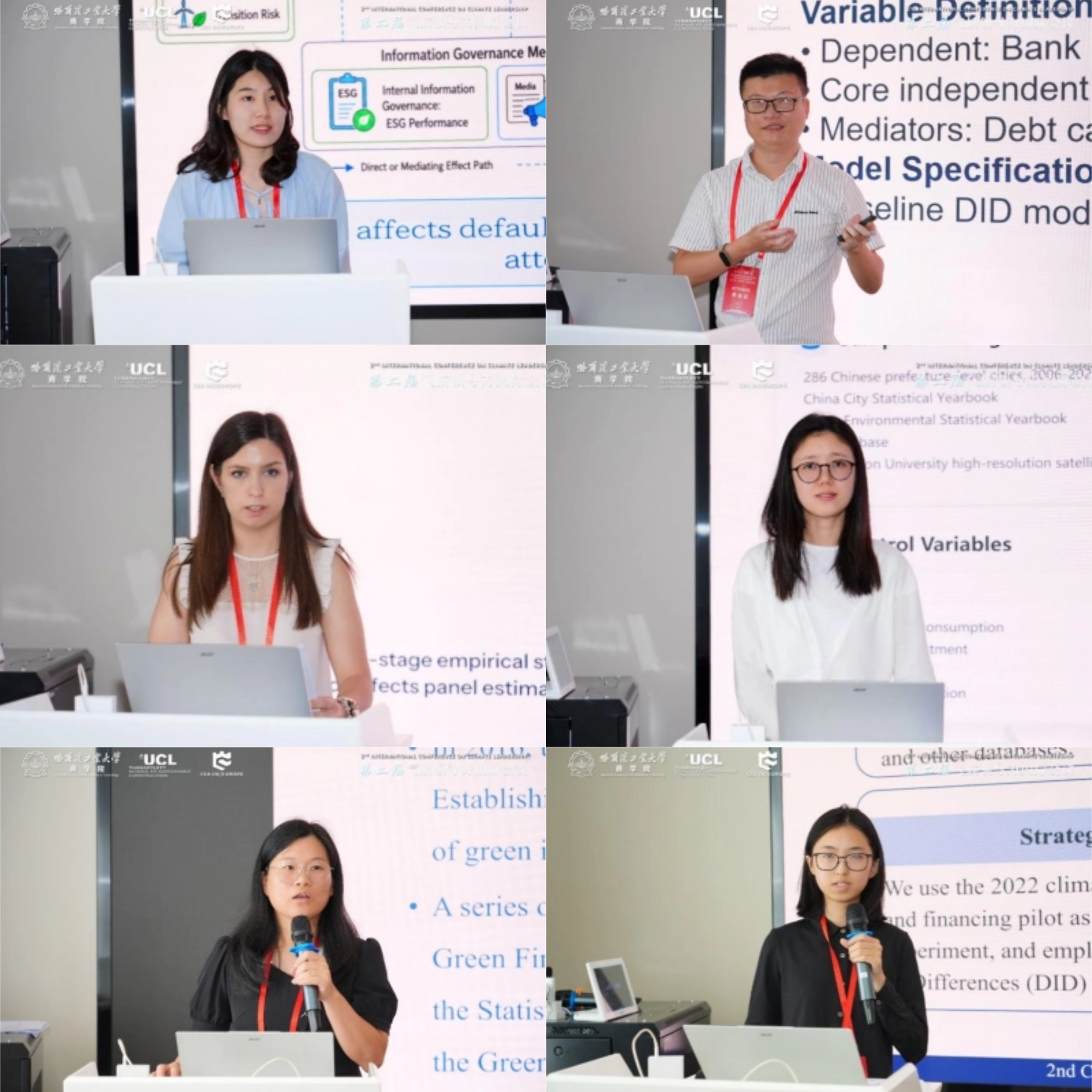
How climate risk propagates through supply chains and financial markets was a central theme. On the "green innovation bubble," research found that firms with high climate risk exposure tend to file large numbers of low-quality green patents to capitalize on market expectations. While such "strategic innovation" may temporarily lift share prices, it does nothing for real emissions reduction—regulators need patent quality screening mechanisms. On the "crisis defense" value of Environmental, Social, and Governance, a natural experiment using international geopolitical conflicts found that firms with high Environmental, Social, and Governance scores significantly outperformed the market in stock returns during the early phase of conflicts, with the environmental and social pillars providing the strongest protection. The effect was concentrated in the first three months and worked through improved corporate fundamentals rather than investor sentiment alone.
Studies from supply chain and corporate finance perspectives revealed multi-layered climate risk transmission. When suppliers face greater physical climate risk than their customers, they often extend more trade credit to maintain relationships—worsening their own liquidity pressures—leading researchers to urge core firms to build risk-sharing mechanisms. Climate risk significantly raises corporate debt default probabilities, especially among private enterprises with tight financing constraints, though high-quality Environmental, Social, and Governance disclosure and media scrutiny can soften the blow. Research on climate policy uncertainty and energy-intensive industries found heterogeneous risk spillover effects across chemicals, steel, and building materials, with climate policy uncertainty acting mainly as a "risk receiver." Another study on Environmental, Social, and Governance uncertainty found nonlinear effects across sectors: negative for most industries over the long term but largely market noise in the short term, suggesting investors need cross-cycle asset allocation strategies.
Environmental, Social, and Governance Mechanisms and Green Transition Pathways
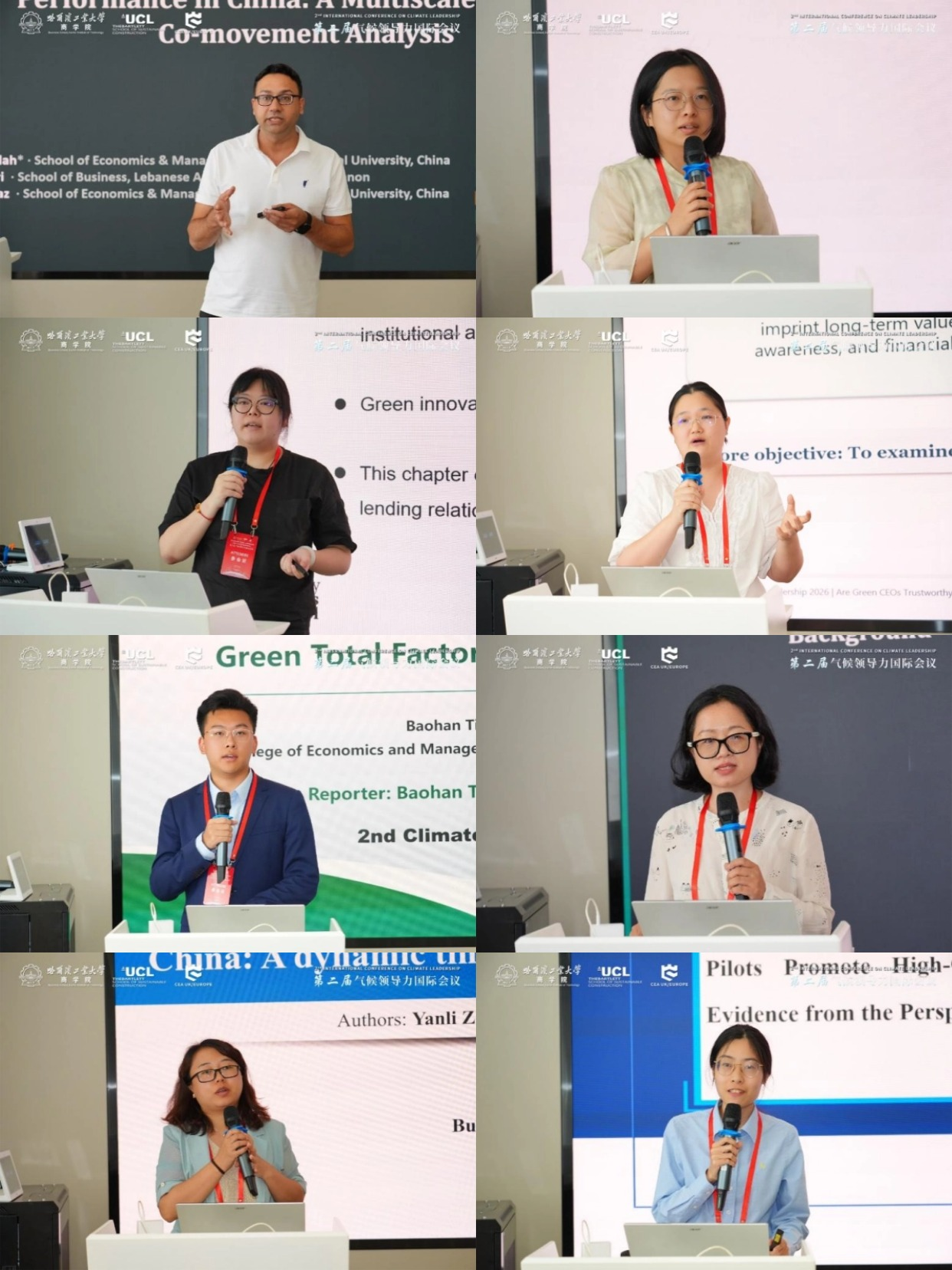
The forum's third theme centered on Environmental, Social, and Governance practices and the institutional design of corporate green transition. On environmental regulation, command-and-control measures primarily drive progress by forcing technological innovation, while market-based instruments rely more on stakeholder oversight; firms should go beyond compliance and embed green governance in strategic decisions. To combat greenwashing, researchers proposed a consumer empowerment framework using blockchain and digital product passports, where full-lifecycle traceability helps verify products' true sustainability and creates bottom-up pressure for accountability. High-quality Environmental, Social, and Governance disclosure is not just a compliance exercise but a powerful signal of climate leadership and long-term resilience; it can significantly ease financing constraints, with its "credit enhancement" effect strongest in regions with less developed legal and financial systems.
On internal governance in financial institutions and enterprises, bank–firm relationship research found that banks' Environmental, Social, and Governance disclosure significantly improves the quality—but not the quantity—of green innovation among borrowers, an effect channeled mainly through banks' ongoing monitoring and screening, underscoring their role as "gatekeepers." Employee stock ownership plans effectively boost green innovation, especially in firms where employees have strong local roots. For the insurance sector, scholars built a dedicated Environmental, Social, and Governance compliance indicator system and identified seven configurational pathways to high compliance, with small firms facing greater hurdles—providing a basis for differentiated regulation. Environmental courts, through specialized adjudication, advance substantive green innovation, though the effect is insignificant in resource-based cities. Digital industrial clustering shows strong emission-reduction potential, leading researchers to propose "integrating virtual and physical clustering" as a policy direction.
Over two days, scholars combined rigorous empirical analysis with interdisciplinary dialogue to map how climate risks propagate through supply chains, financial markets, and judicial systems. Breakthroughs emerged in measuring climate policy uncertainty, Environmental, Social, and Governance information governance, and assessing green financial instrument effectiveness. The findings enrich climate finance theory while offering practical guidance for policymakers refining their toolkits, financial institutions strengthening risk management, and enterprises improving green governance. Harbin Institute of Technology Business School said it will continue to advance academic exchange and practical exploration in climate finance, contributing to the global green and low-carbon transition.


